
LLM Councils plan it. Ralph Loops perfect it. OpenCode ships it.
A smart local engine for long-running AI software delivery through multi-model council planning, worktree isolation, and human-gated approvals.
1$ curl -fsSL https://www.looptroop.ovh/install | sh
2$ looptroop open
Prerequisites: OpenCode, Node 24.18.0+, Git
See LoopTroop in Action
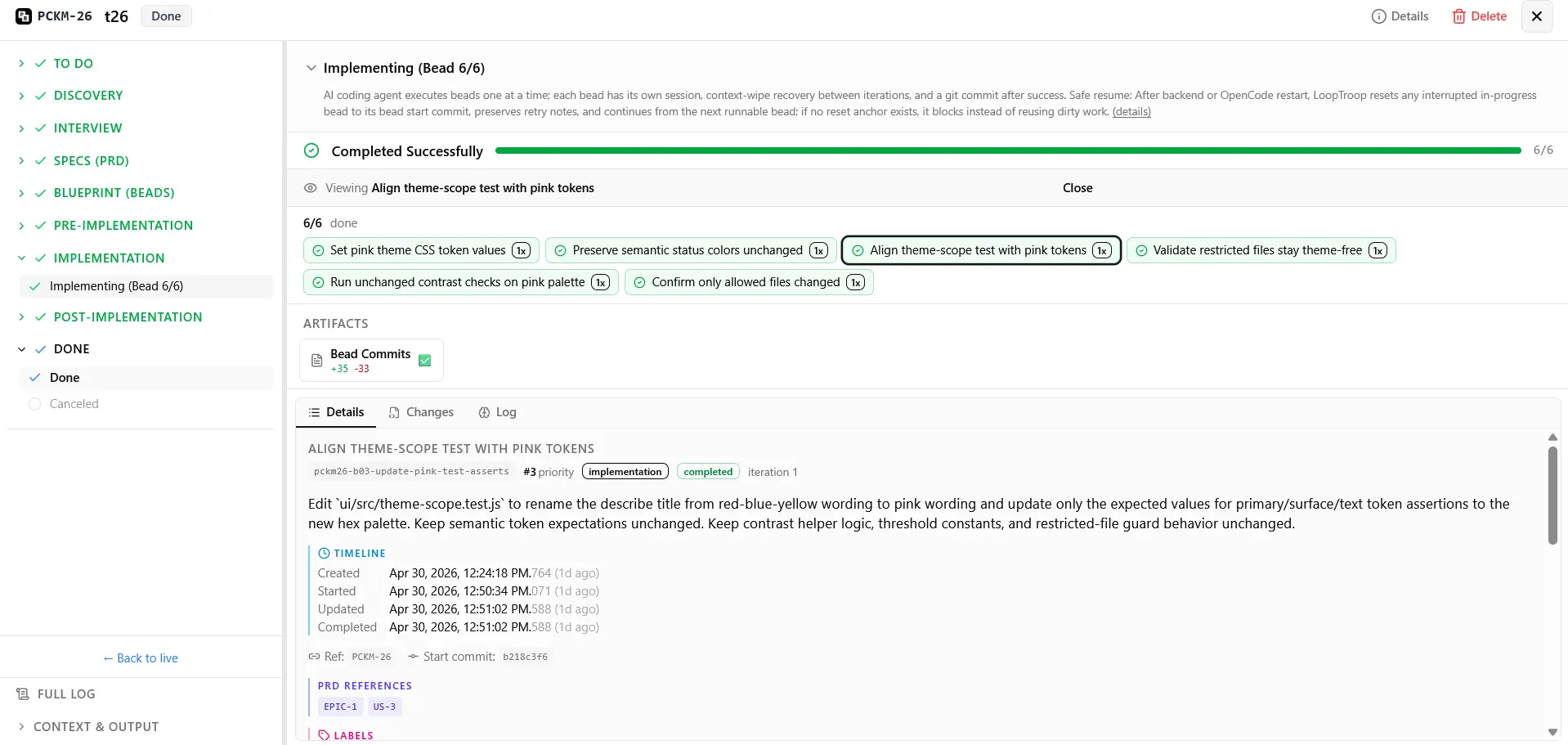
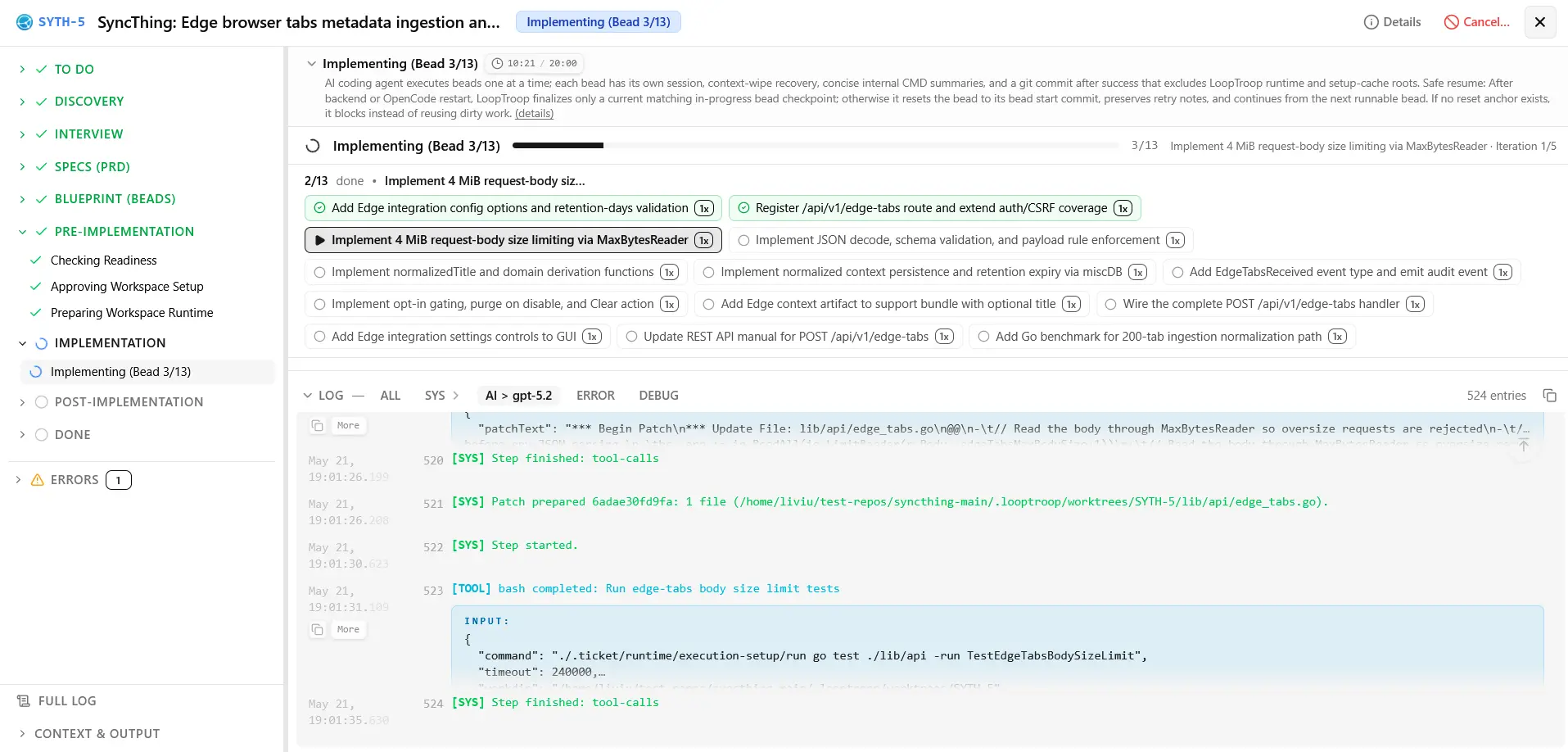
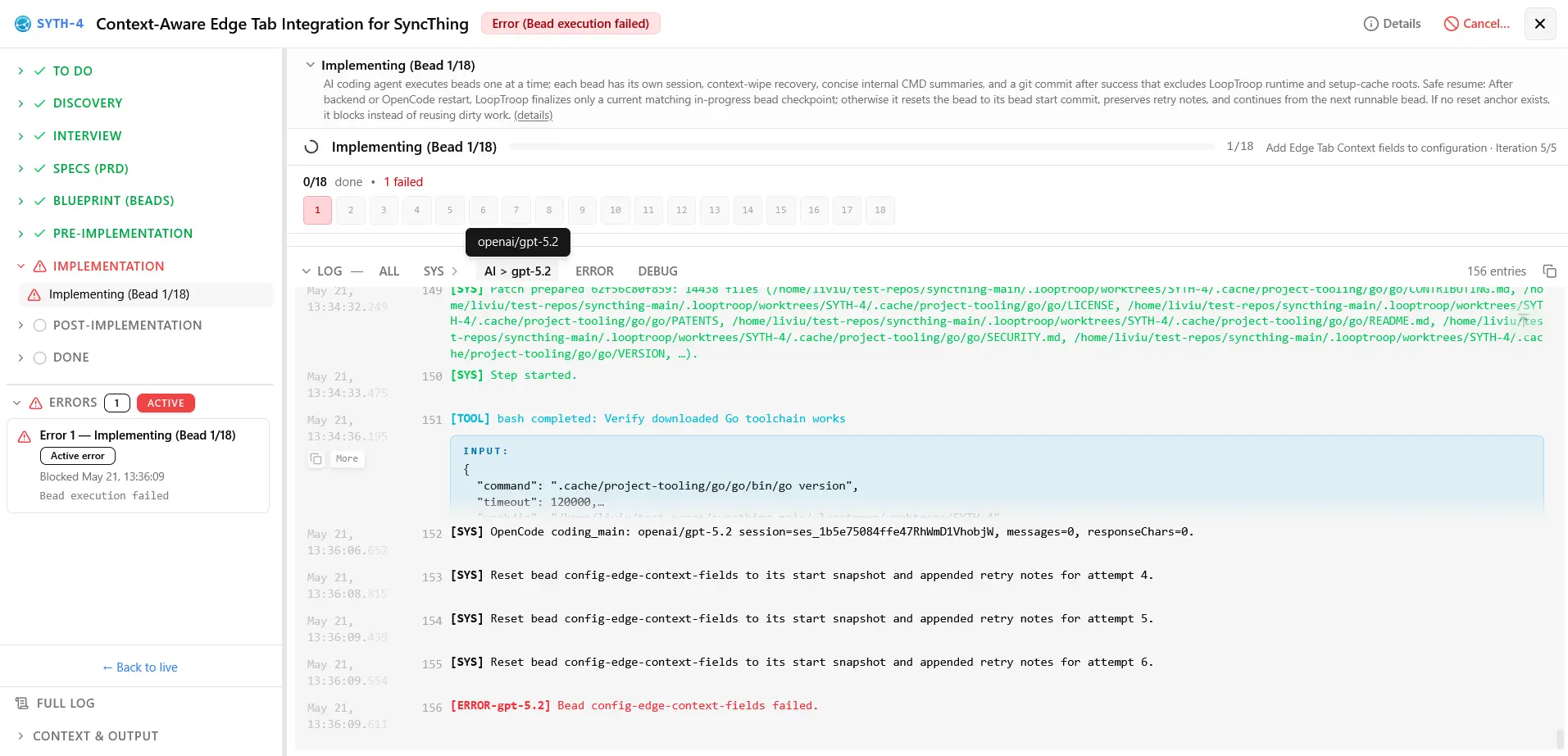
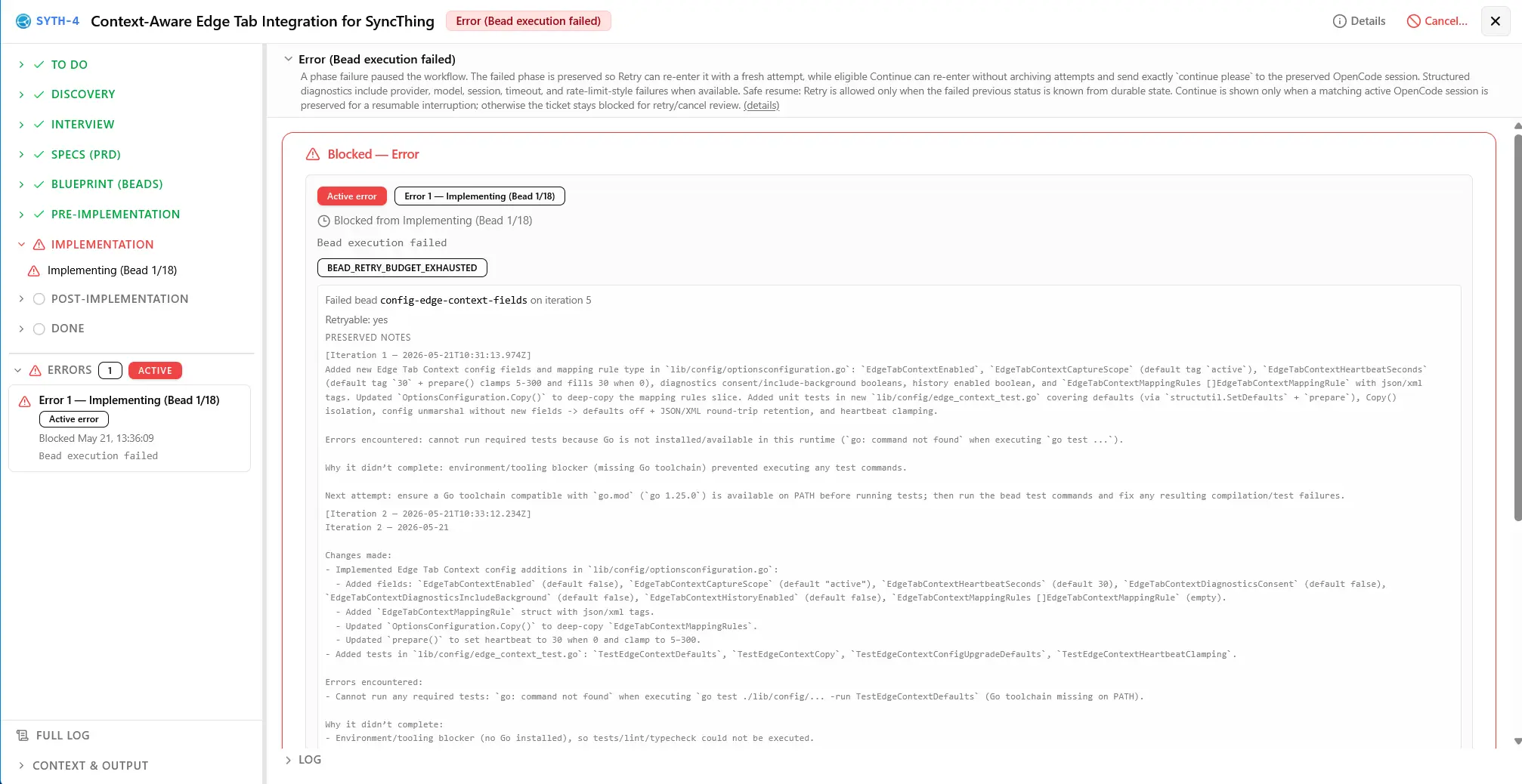
From project setup to final implementation review, explore every stage of the LoopTroop workflow. Click any screenshot to view fullscreen.
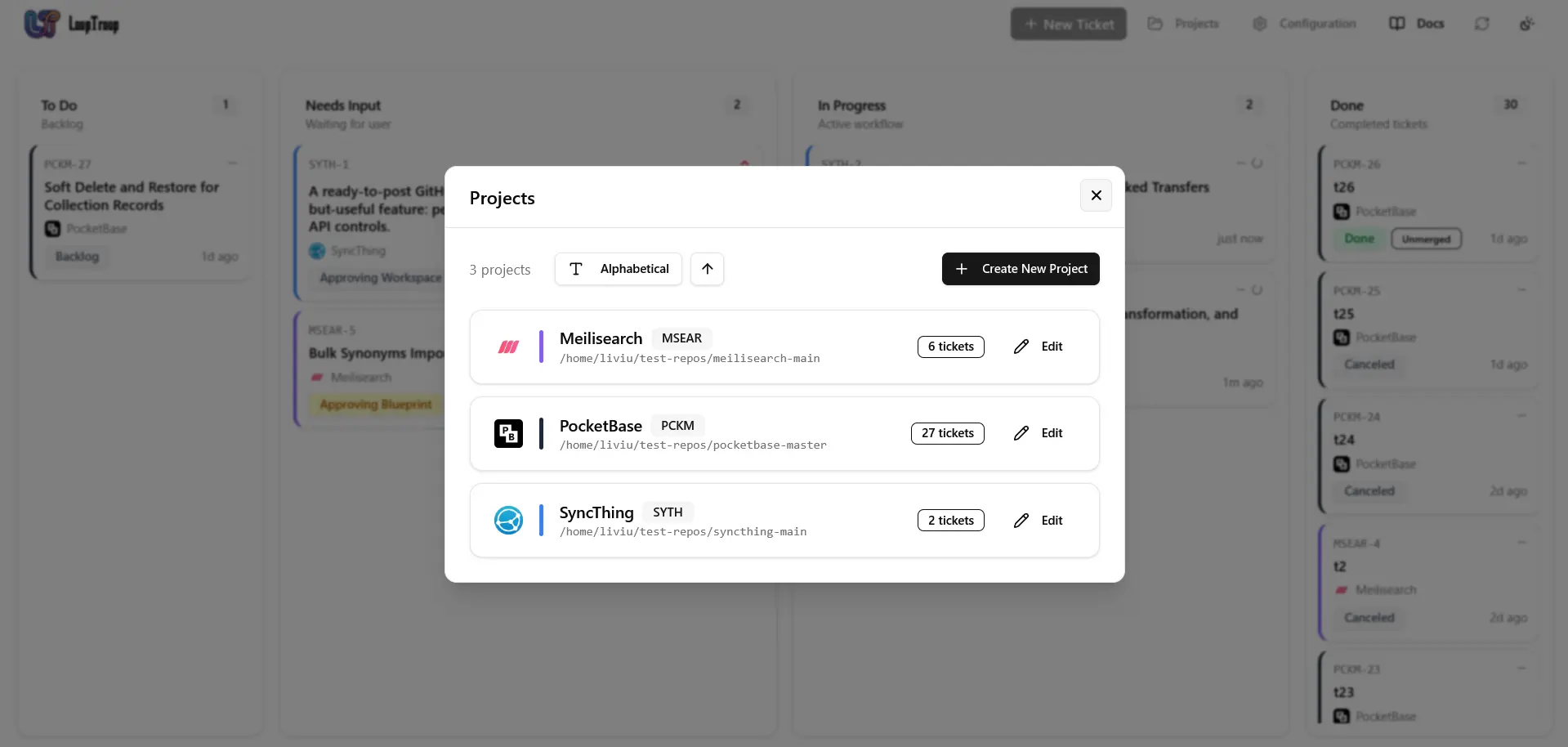
Projects Dialog
Manage all your attached repositories from a central dashboard. Review ticket counts at a glance, register new local Git repos, and track the overall health of each project. The dialog gives you full visibility into which codebases are active and ready for AI-driven orchestration.
- Register local Git repositories
- Track ticket counts per project
- Monitor project status at a glance
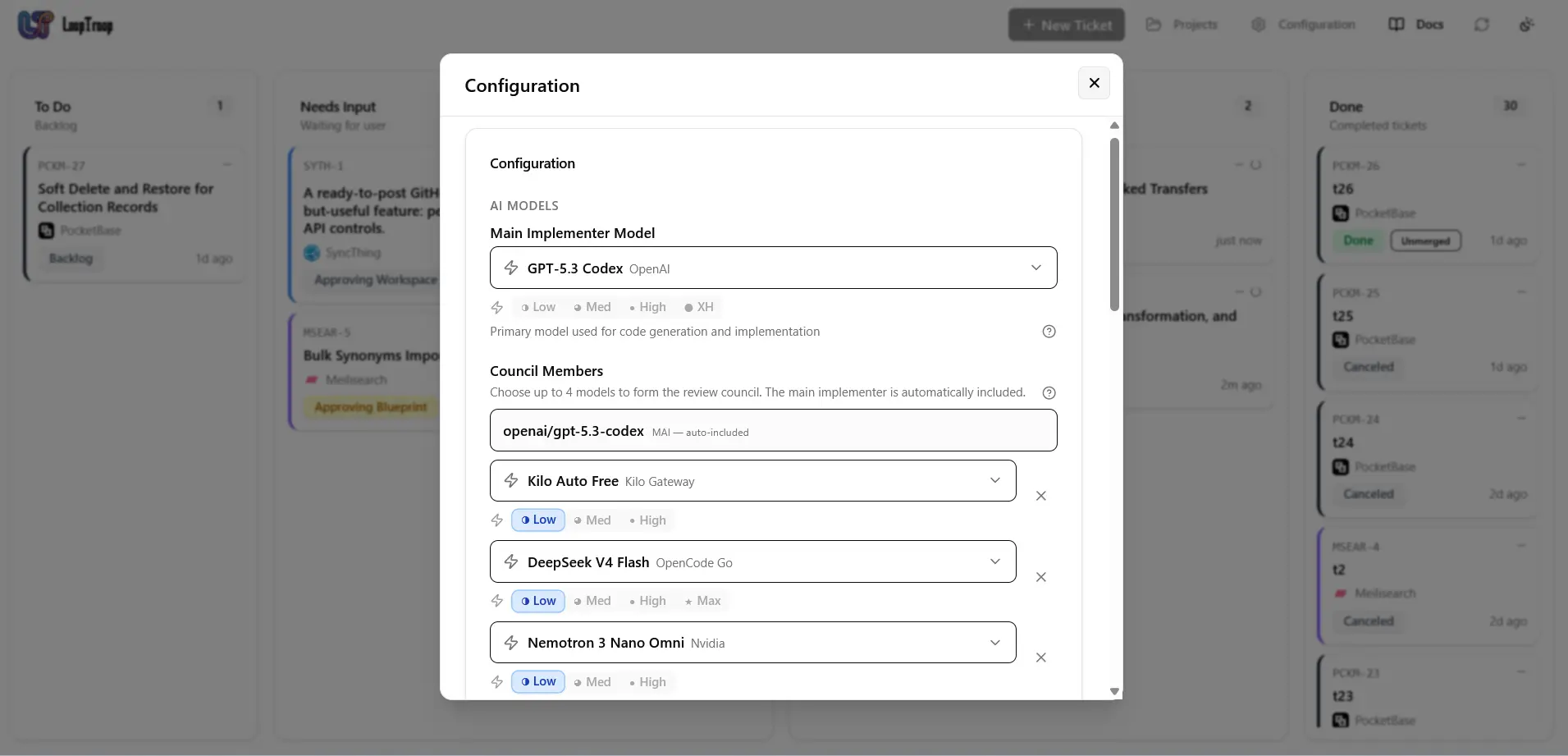
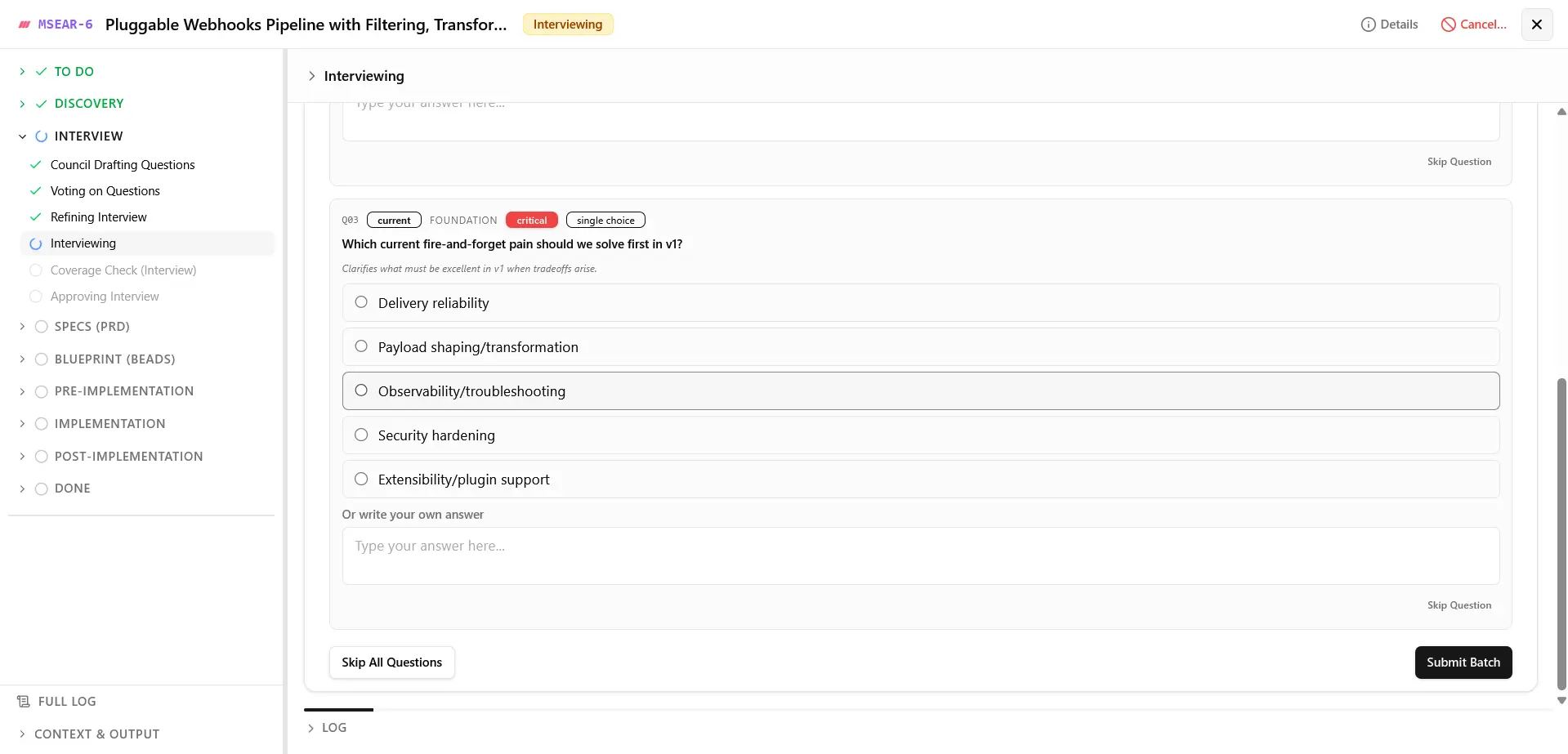
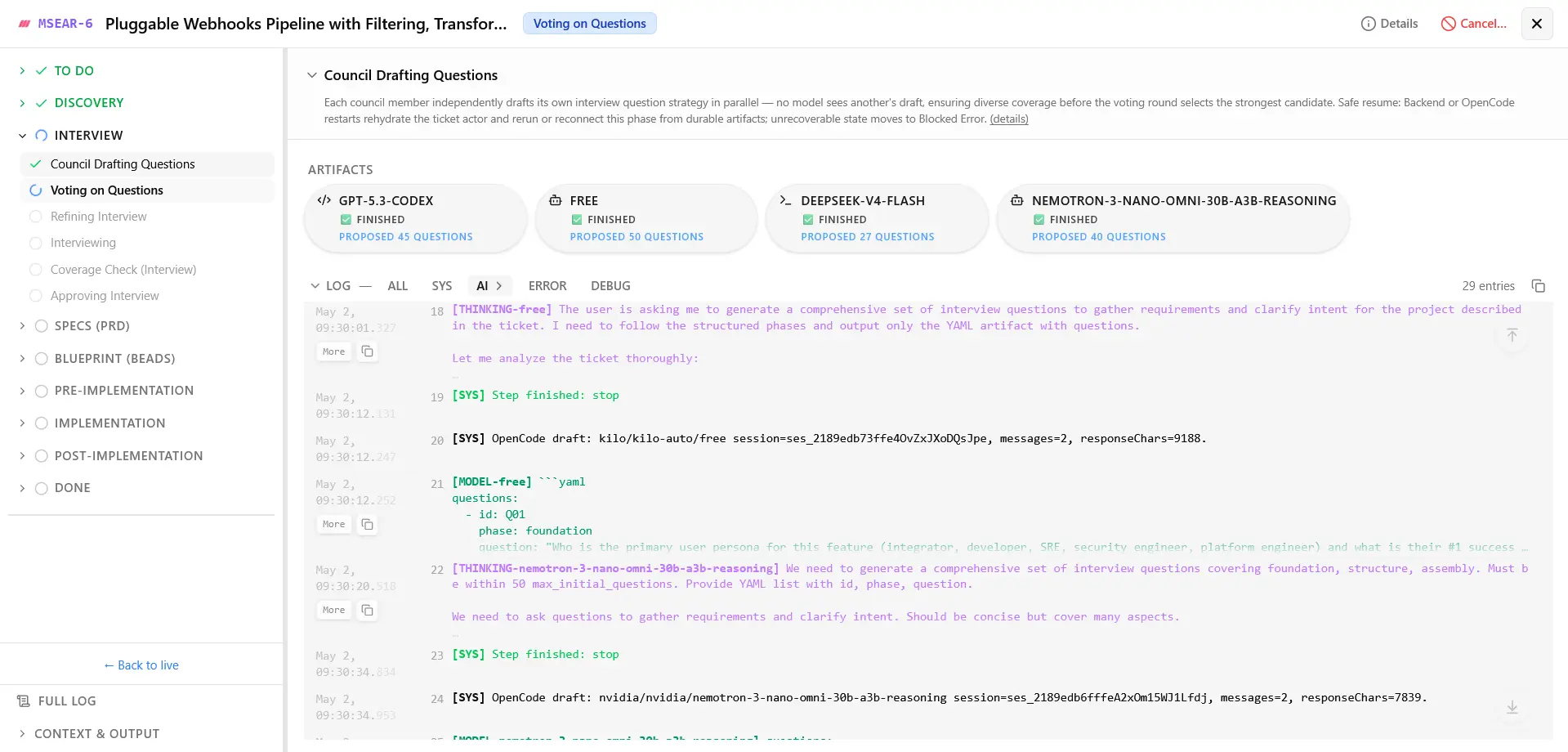
LoopTroop is a local GUI orchestrator for long-running, high-correctness AI software delivery, taking you from a raw idea to merged code. Free and fully open-source.
They prioritize fast feedback loops. This works well for quick fixes, but these tools break down on complex, multi-file feature work where alignment and correctness are paramount. Conversation history bloats, the AI gets confused, and code quality falls off a cliff.
It intentionally sacrifices raw speed to deliver a final result that matches exactly how you envisioned it. Instead of trusting a single, endless AI chat session, LoopTroop breaks the job into clean, separate stages.
The Architecture Behind
Durable AI Delivery
Four foundational primitives that eliminate the common failure modes of AI-assisted coding, from biased planning to context rot and degenerate retries.
LLM Council
Multi-model planning instead of raw chat. Independent drafting, anonymous voting, and winner refinement to eliminate model bias. Each council member drafts independently, scores peers with a weighted rubric, and the winner synthesizes the strongest ideas from losing proposals.
Beads
LoopTroop's smallest execution unit. Complex plans are decomposed into isolated, bounded coding tasks with explicit acceptance criteria. Each bead targets specific files, carries its own validation steps, and can be independently verified, preventing cascading failures across your codebase.
Context Engineering
Rather than passing bloated, degraded transcripts to the model, LoopTroop isolates and rebuilds minimal context from scratch for each phase. The agent only sees the specific active bead, its file target, and the test file; this eliminates conversation pollution and LLM drift that plagues long coding sessions.
The Ralph Loop
A strict manager philosophy. Instead of begging a confused model to fix its code, LoopTroop scraps degraded workspaces and retries with a fresh session inside isolated Git worktrees. Preserves a compact error trace, discards contaminated sessions, and can run 10+ hours unattended without degradation.
Three Architectural Layers
Each layer has a distinct core mission and technical lifecycle. Together, the layers separate planning, execution, and shipping.
How LoopTroop Works
A ticket's journey from raw idea to merged code: structured, isolated, and human-gated at every critical boundary.
Define your local task ticket with a clear description of what needs to be built. This is the seed that kicks off the entire orchestration pipeline. The more precise your input, the more targeted the AI planning becomes.
Multiple independent LLM models collaborate on your task. Each drafts a plan, scores peers anonymously, and votes on the best approach. The winner refines its proposal by incorporating the strongest ideas from competing drafts, eliminating single-model bias.
The approved plan is split into small, logical file operations. Each becomes a self-contained "bead" with explicit purpose, acceptance criteria, dependencies, and target files. This granular decomposition prevents cascading failures and keeps each unit independently verifiable.
OpenCode executes each bead's code inside isolated Git worktrees. If execution fails, the Ralph Loop kicks in. It preserves a compact error trace, discards the contaminated workspace, and retries with fresh context. This loop can run unattended for hours without degradation.
You review every change, approve what looks right, adjust what needs tweaking, or regenerate entire beads. Only after your explicit sign-off does code get committed and merged locally. No code reaches your main branch without human verification.
Ready to Orchestrate?
Install LoopTroop, point it at your repo, and let LLM councils plan your next feature while you stay in control of every merge.